Growth Chart for My Little Ones

Sunday, December 22, 2024

30 Dec 2024 - BKK Day 8 (Ayutthaya): Wat Ratchaburana

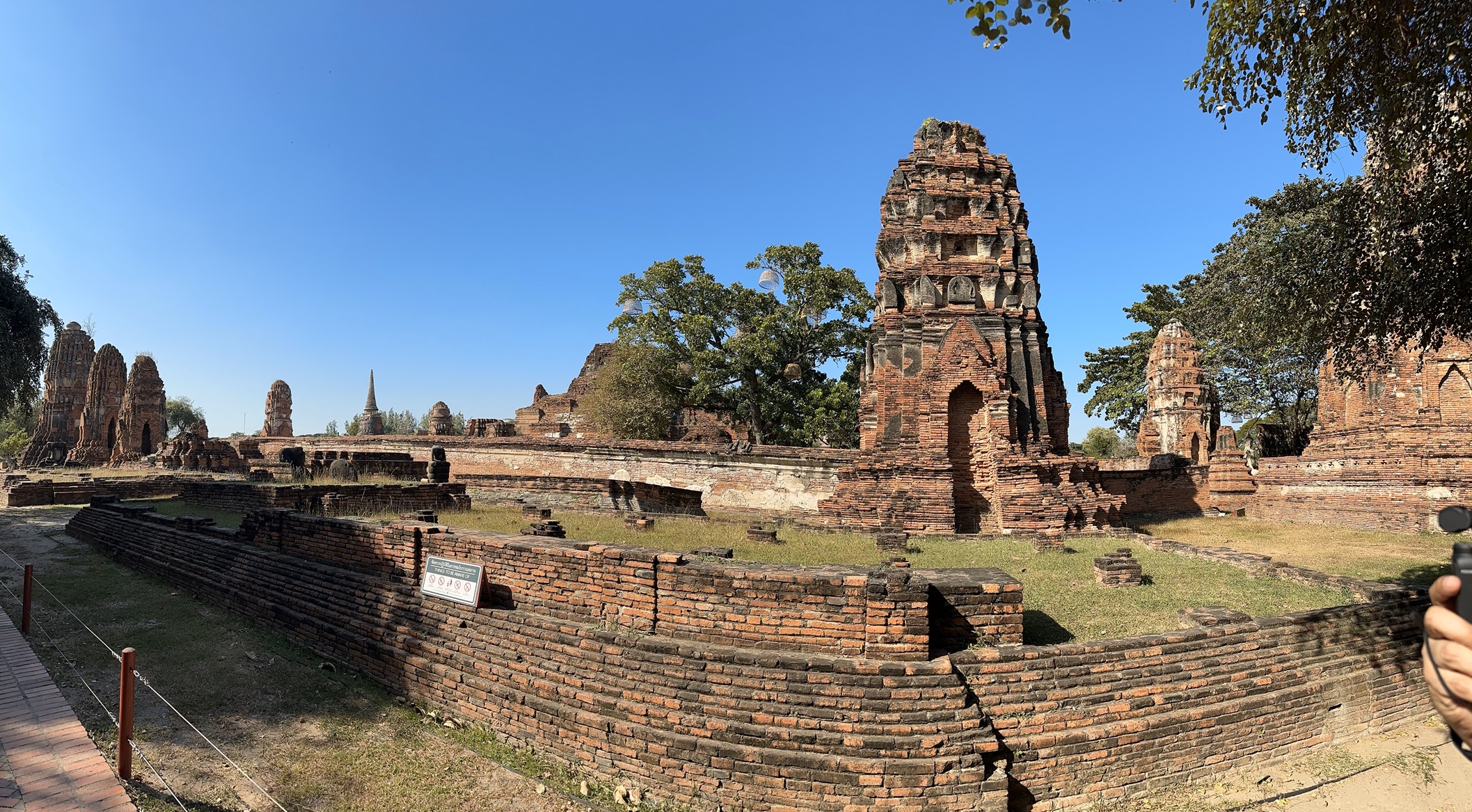
The third temple where our tour brought us to was Wat Ratchaburana, a significant Buddhist temple renowned for its historical and architectural importance.
The first prominent structure that caught attention was the temple's central prang (Khmer-style tower), considered one of the finest in Ayutthaya.
Below photo with the central prang was taken by our tour guide and he did it for almost everyone in the tour group.
The design of this tall, tower-like spire reveals influences from both Khmer and Sukhothai architectural styles.  This prang symbolizes Mount Meru, the center of the universe in Buddhist and Hindu cosmology. Surrounding the prang are smaller stupas and remnants of the royal vihara, providing insight into the temple's original grandeur.
One of the more interesting features is the crypt that is located within the central prang, that once contained many treasures and still has some remaining mural paintings.  In 1957, the temple's crypt was looted, revealing a wealth of treasures, including gold artifacts, a sword of victory, a crown, and Buddha statues. These items are now exhibited at the Chao Sam Phraya National Museum.
Visiting these ancient temples in Ayutthaya made me feel as though I was having an adventure in one of those "Indiana Jones" movies.
Wat Ratchaburana was established in 1424 by King Borommarachathirat II, also known as Chao Sam Phraya.  The temple was built on the cremation site of his two elder brothers, who tragically died in a battle for the royal succession. Therefore, it is a temple that memorializes a tragic event within the royal family.
Wat Ratchaburana stands as a testament to the rich history and artistic heritage of the Ayutthaya period.
The photo below was edited on my iPhone which really helps to bring out the colours.


Back to Itin        Next

30 Dec 2024 - BKK Day 8 (Ayutthaya): Wat Phra Mahathat

The next temple where we visited was Wat Phra Mahathat, built in the 14th century, around the reign of King Borommatrailokkanat, who ruled Ayutthaya from 1448 to 1488.  The name "Phra Mahathat" translates to "the Temple of the Great Relic," referring to the sacred relics of the Buddha believed to be housed at the temple.
Wat Phra Mahathat is renowned for its impressive ruins, which reflect the grandeur of the Ayutthaya Kingdom. The temple's most recognizable feature is its large, central prang (a Khmer-style tower), which rises majestically from the temple grounds. The prang, once covered in intricate carvings, is a symbol of Mount Meru, the center of the Buddhist cosmos. Though much of its detail has faded with time, the prang still stands as a reminder of the artistic and architectural achievements of the period.
One of the most famous features of Wat Phra Mahathat is the iconic Buddha head entwined in the roots of a banyan tree.  This surreal and captivating image is one of the most photographed and recognizable symbols of the Ayutthaya ruins. It is believed that the head of the Buddha statue was displaced during the invasion of the Burmese in the 18th century, and over time, the roots of the tree grew around it, creating this striking scene.
Wat Phra Mahathat holds profound religious significance for Buddhists. It is believed that the temple houses important relics of the Buddha, and for centuries, it has been a place of pilgrimage. The temple is associated with both royal and monastic practices, as it was one of the most prominent centers of religious life during the peak of the Ayutthaya Kingdom.
As we explored the temple ground, we saw many headless Buddha statues and according to the tour guide, the Buddha heads were stolen by thieves in the ancient days because there were usually gold and precious gems hidden within the Buddha heads.
Another saying is that during the Burmese invasion, the Burmese forces not only looted the city’s wealth but also destroyed many of its sacred symbols, including the Buddha statues. The heads of many of these statues were deliberately severed, likely as a form of symbolic desecration or to steal valuable materials (in some cases, the heads were made of gold or other precious metals).
The temple complex contains the remains of numerous chedis, viharns, and other structures.
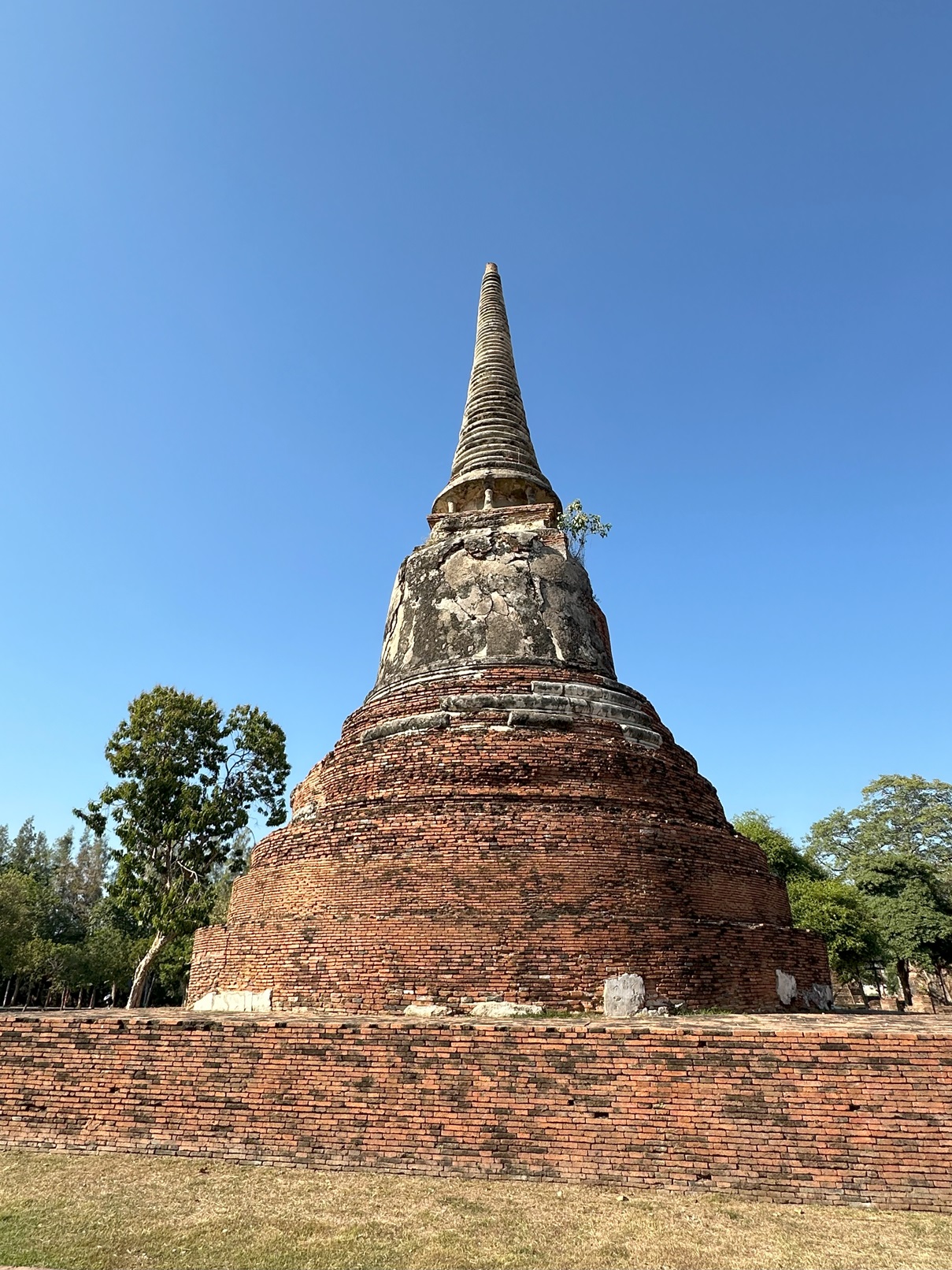
The temple's central prang (Khmer-style tower) was once a grand structure, but now only its ruins remain.  Surrounding the central prang are several smaller chedis (stupas), which once housed relics and were used for religious purposes. These chedis reflect the temple's importance as a center of Buddhist practice and its role in the royal religious rituals.
Wat Phra Mahathat is a UNESCO World Heritage site and a popular tourist destination in Ayutthaya. Though much of the temple has been damaged by the Burmese invasion in 1767, it remains one of the most important landmarks in the city.
We noticed that some of the Chedis were slightly tilted. It can be attributed to structural damage caused during the Burmese invasion. And over time, natural elements like soil erosion, shifting ground, and earthquakes may have also contributed to the structural instability of the chedis, further exacerbating their slanting appearance.
With its magnificent ruins, the iconic Buddha head entwined in tree roots, and its historical significance, Wat Phra Mahathat is a must-visit destination for anyone exploring the ancient city of Ayutthaya


Back to Itin        Next

30 Dec 2024 - BKK Day 8 (Ayutthaya): Wat Yai Chaimongkhon

The first of the four temples that we visited was Wat Yai Chaimongkhon.
The first thing we saw after entering the temple was a reclining Buddha, draped in saffron cloth, a traditional symbol of respect.
The structure that houses the reclining buddha, shows the age of the temple, with the base of the structure being original.
Originally known as Wat Pa Kaeo, this temple was established in 1357 by King U-Thong, the first king of Ayutthaya.  It was initially intended to house monks returning from studies in Sri Lanka, emphasizing its early connection to established Buddhist traditions.  Another notable architectural feature of Wat Yai Chaimongkhon is the elegant, ornate sala (pavilion) housing a large seated Buddha statue.
The temple's current name, Wat Yai Chaimongkhon (meaning "Monastery of Auspicious Victory"), stems from King Naresuan the Great's victory over the Burmese in 1592.  This pivotal battle solidified Ayutthaya's independence, and the temple became a symbol of this triumph.
Wat Yai Chaimongkhon remains an active temple, where Thai Buddhists come to pray and make offerings.  The temple's association with King Naresuan's victory makes it a symbol of Thai national pride and serves as a reminder of Ayutthaya's golden age and the resilience of the Thai people.
Like much of Ayutthaya, the temple suffered damage during the Burmese invasion in 1767. Subsequently it underwent periods of abandonment and neglect. Later significant restoration efforts, particularly in the 20th century, have helped preserve and revitalize the temple.
One of the most striking features of Wat Yai Chaimongkhon is its massive central chedi (stupa). This large, bell-shaped stupa stands over 60 meters tall and is an iconic feature of the temple's skyline.  Its bell-shaped design is a classic example of Ayutthaya-era architecture, with influences from Sri Lankan styles.  
Visitors can climb the chedi to enjoy panoramic views of the surrounding historical park.
The interior of the Chedi contains Buddha images, and places for devotees to leave offerings.
I climbed up and went into the Chedi with some of the tour group members while Tracy and the kids waited for me outside the Chedi.
The temple grounds are also home to numerous other smaller stupas, chedis, and intricate carvings that provide a sense of the temple's long history and grandeur.
In addition, the temple features a series of seated Buddha statues that line the steps leading to the chedi. These statues represent monks or disciples, and they offer a serene and peaceful atmosphere to the site.
Wat Yai Chaimongkhon is a significant cultural and historical landmark in Ayutthaya, offering a fascinating glimpse into Thailand's past. With its impressive architecture, rich history, and religious significance, the temple continues to be an important symbol of both the Ayutthaya Kingdom and the practice of Theravada Buddhism in Thailand.

Back to Itin        Next